


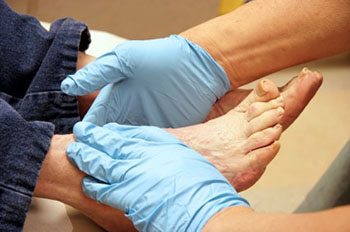
Diabetes can affect the nerves, circulation, skin, and healing ability of the feet. A minor blister, cut, or pressure point may become a serious problem if it goes unnoticed or does not heal properly.
At Preferred Footcare, our podiatrists provide preventive diabetic foot care in Stamford, Connecticut. We monitor circulation, sensation, skin, nails, and pressure areas to help identify problems early and reduce the risk of complications.
If you have diabetes and notice a wound, redness, swelling, drainage, or a change in sensation, call (203) 975-9600 to arrange an evaluation.
Request an AppointmentHow Diabetes Affects the Feet
Diabetes can increase the risk of foot problems through nerve damage, reduced circulation, and slower healing.
Diabetic Neuropathy
Diabetic neuropathy can reduce sensation in the feet. A person may not feel a cut, blister, burn, or object inside a shoe.
Neuropathy may also cause:
- Burning pain
- Tingling
- Numbness
- Increased sensitivity
- Sharp or shooting pain
- Muscle weakness
- Balance problems
Loss of protective sensation means that an injury may continue to experience pressure before it is discovered.
Reduced Circulation
Diabetes may contribute to reduced blood flow in the legs and feet. Poor circulation can make it more difficult for wounds to heal and for the body to fight infection.
Possible signs include:
- Feet that frequently feel cold
- Changes in skin color
- Weak pulses
- Shiny or thin skin
- Reduced hair growth
- Leg or foot pain during activity
- Wounds that heal slowly
Changes in Foot Shape
Nerve and muscle changes may alter the shape of the feet and toes. Bunions, hammertoes, prominent bones, or a collapsed arch can create areas of increased pressure.
These pressure points may develop calluses, blisters, or wounds, especially when shoes do not fit properly.
Dry or Cracked Skin
Nerve damage may affect the skin’s ability to maintain normal moisture. Dry, cracked skin can create openings where bacteria may enter.
Common Diabetic Foot Problems
People with diabetes can develop the same foot conditions as anyone else, but the risk of complications may be higher.
Common concerns include:
- Cuts and scrapes
- Blisters
- Corns and calluses
- Cracked skin
- Ingrown toenails
- Thick or fungal toenails
- Athlete’s foot
- Bunions and hammertoes
- Numbness or burning pain
- Foot ulcers
- Skin and nail infections
- Poor circulation
- Charcot foot
A diabetic foot ulcer is an open wound that commonly develops under the foot or over a pressure point. Because neuropathy may reduce pain, an ulcer can become deeper without being noticed.
Charcot foot is a serious condition involving weakening and damage of the bones and joints. The foot may become warm, red, swollen, or change shape, sometimes with little pain.
Warning Signs That Require Prompt Care
Contact a healthcare provider promptly if you notice:
- An open sore or blister
- Redness that is spreading
- Increasing swelling or warmth
- Pus, drainage, or an unpleasant odor
- Black, blue, pale, or discolored skin
- A new callus with blood underneath
- A nail growing into the skin
- A puncture wound
- A burn
- A sudden change in foot shape
- A warm and swollen foot without a clear injury
- Fever or chills with a foot wound
Do not wait for pain before seeking care. Neuropathy can make a serious problem feel mild or painless.
What Happens During a Diabetic Foot Examination?
Regular podiatric examinations can identify risk factors before a wound or infection develops.
During a diabetic foot evaluation, the podiatrist may:
- Inspect the skin for cuts, cracks, and pressure areas
- Examine between the toes
- Check the toenails
- Look for corns and calluses
- Evaluate foot and toe alignment
- Check for swelling and temperature changes
- Test protective sensation
- Assess circulation
- Examine pulses in the feet
- Review footwear
- Observe how you stand and walk
- Ask about numbness, burning, or tingling
- Review previous wounds or infections
The frequency of examinations depends on your level of risk. Patients with neuropathy, circulation problems, deformities, or a history of foot ulcers may require more frequent appointments.
Additional circulation testing, imaging, laboratory work, or referral to another specialist may be recommended when necessary.
Diabetic Foot Care and Treatment
Treatment depends on your foot health, level of sensation, circulation, and any current skin or nail problems.
Professional Nail Care
Thick, curved, fungal, or difficult-to-reach toenails can be challenging to trim safely. Professional nail care may help reduce the risk of accidental cuts and ingrown nails.
Do not attempt to aggressively trim thickened nails if you have reduced sensation or circulation problems.
Corn and Callus Care
Corns and calluses indicate areas of repeated pressure. A podiatrist can safely reduce thickened skin and determine what is causing it.
Do not cut corns or calluses with a blade or use medicated removal products unless directed by a healthcare professional.
Wound Care
A diabetic foot wound requires professional evaluation. Treatment may include:
- Cleaning the wound
- Removing unhealthy tissue
- Reducing pressure on the area
- Applying appropriate dressings
- Treating infection
- Monitoring healing
- Evaluating circulation
- Coordinating additional medical care
The wound should be kept protected according to the instructions provided. Avoid applying unapproved creams, antiseptics, or home remedies.
Pressure Relief and Offloading
Reducing pressure is often essential for healing a foot ulcer. Depending on the location and severity, offloading may involve special padding, footwear, a brace, a walking boot, or another protective device.
Diabetic Shoes and Custom Orthotics
Properly fitted diabetic footwear can reduce rubbing and accommodate changes in foot shape. Custom orthotics may help redistribute pressure away from high-risk areas.
Footwear should be checked regularly because changes in the feet can affect the fit over time.
Infection Treatment
A foot infection may require medication and wound care. More serious infections may require imaging, laboratory testing, hospital treatment, or coordination with other specialists.
Treatment of Foot Deformities
Bunions, hammertoes, prominent bones, and other deformities can create repeated pressure. Treatment may include footwear changes, padding, orthotics, or surgery in selected cases.
Daily Diabetic Foot Care
Daily foot care allows you to identify changes before they become more serious.
Inspect Your Feet Every Day
Check the tops, bottoms, sides, heels, and spaces between the toes. Use a mirror or ask for assistance if you cannot see every area.
Look for:
- Cuts
- Blisters
- Redness
- Swelling
- Cracks
- Drainage
- Bruising
- Nail changes
- Corns or calluses
- Changes in skin color
Wash and Dry Carefully
Wash your feet with warm, not hot, water. Test the temperature with your hand or elbow if you have reduced sensation.
Dry gently, especially between the toes. Do not soak the feet for an extended period unless directed by a healthcare professional.
Moisturize Dry Skin
Apply moisturizer to the tops and bottoms of the feet to reduce dryness and cracking. Avoid applying lotion between the toes because excess moisture may contribute to fungal infections.
Trim Toenails Safely
Trim toenails straight across and smooth sharp edges with a file. Do not cut the corners deeply or trim the nails excessively short.
Arrange professional nail care if the nails are thick, curved, difficult to reach, or unsafe to trim.
Wear Shoes and Socks
Avoid walking barefoot, even at home. Shoes can protect the feet from sharp objects, burns, and other injuries.
Wear clean, dry socks that fit without creating tight bands or folds.
Check Your Shoes
Before putting on shoes, check inside for stones, rough seams, torn lining, or other objects. Make sure the shoes fit properly and do not rub against the toes or heels.
Reducing the Risk of Diabetic Foot Complications
Managing overall health is an important part of protecting the feet.
Helpful measures include:
- Follow your diabetes management plan
- Attend regular medical appointments
- Stop smoking
- Monitor the feet daily
- Wear properly fitted shoes
- Avoid walking barefoot
- Treat athlete’s foot promptly
- Report new numbness or pain
- Keep scheduled podiatry visits
- Follow wound care instructions
- Avoid heating pads and hot water bottles
- Do not self-treat corns, calluses, or ingrown nails
- Seek care promptly for wounds and infections
Do not use heating devices on numb feet. Reduced sensation can prevent you from noticing a burn.
Frequently Asked Questions About Diabetic Foot Care
How often should someone with diabetes see a podiatrist?
The appropriate schedule depends on circulation, sensation, foot structure, and previous complications. Patients at higher risk may need more frequent examinations.
Why are foot wounds more serious for people with diabetes?
Neuropathy may prevent an injury from being noticed, while reduced circulation can delay healing. These factors can increase the risk of infection and other complications.
Can I trim my own toenails if I have diabetes?
Some patients can safely trim their nails. Professional care is recommended if you have reduced sensation, poor circulation, thick nails, vision problems, or difficulty reaching your feet.
Should I walk barefoot at home?
No. Walking barefoot increases the risk of cuts, punctures, burns, and other injuries that may not be immediately noticed.
Can I use corn-removal products?
Do not use medicated corn-removal products without professional guidance. The acids in these products can damage healthy skin and create wounds.
What should I do if I find a blister?
Do not pop the blister. Protect the area from pressure and contact your healthcare provider, especially if the blister is large, red, draining, or accompanied by swelling.
When is a diabetic foot problem an emergency?
Seek urgent medical care for spreading redness, significant swelling, drainage, black or blue skin, fever, a deep wound, or a sudden warm and swollen foot.
Schedule Diabetic Foot Care in Stamford, CT
Preventive podiatric care can help identify pressure areas, circulation changes, nail problems, and wounds before they become more serious. Preferred Footcare provides diabetic foot evaluations and ongoing care based on each patient’s risk level.
Call (203) 975-9600 or request an appointment online for diabetic foot care in Stamford, Connecticut.
Request an Appointment


