


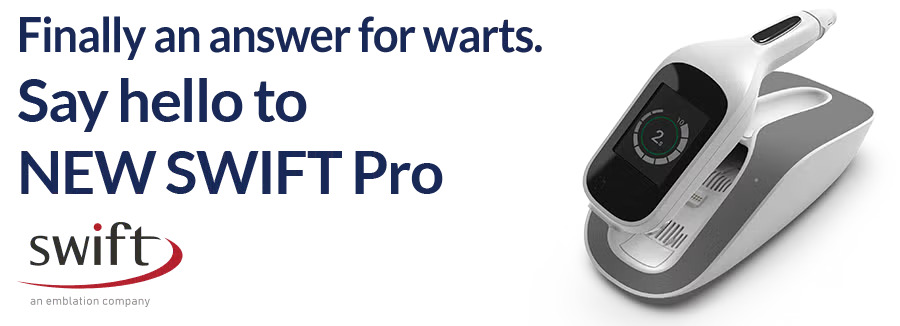
Swift microwave therapy is a noninvasive treatment used for plantar warts and other selected foot warts. It delivers controlled microwave energy into the affected skin to stimulate an immune response against the virus responsible for the wart.
Preferred Footcare offers Swift treatment in Stamford, Connecticut, for appropriately selected patients. Before recommending treatment, our podiatrists confirm that the growth is a wart and determine whether Swift is suitable for its size, location, and severity.
If a painful plantar wart is spreading, returning, or not responding to previous treatment, call (203) 975-9600 to schedule an evaluation.
Request an AppointmentWhat Is Swift Microwave Therapy?
Swift is an in-office treatment that uses controlled microwave energy to target wart tissue.
Plantar warts are caused by certain strains of human papillomavirus, commonly called HPV. The virus can remain within the outer layers of the skin without producing a strong enough immune response to eliminate the infected tissue.
Swift is designed to create a controlled thermal effect within the wart. This stimulation is intended to alert the immune system to the presence of the viral infection.
Unlike treatments that remove layers of skin, Swift focuses on stimulating an immune response. The wart may gradually reduce as the body responds over time.
Swift generally does not require:
- A surgical incision
- An injection into the wart
- Freezing
- Chemical acids applied at home
- A surgical wound
- Stitches
- Routine bandaging
- Extended recovery time
The treatment does not guarantee that every wart will clear. Results vary depending on the immune response, number of warts, treatment history, and other health factors.
Who May Be a Candidate for Swift?
Swift may be considered for adults and children with a confirmed plantar wart or another appropriate wart on the foot.
Potential candidates may have:
- A painful wart on the sole
- A wart that keeps returning
- Multiple plantar warts
- A cluster of mosaic warts
- A wart that has not responded to previous care
- Difficulty walking because of the lesion
- A preference to avoid acids or freezing
- A wart that interferes with sports or work
Before recommending treatment, the podiatrist will review:
- The appearance and location of the growth
- Number and size of the warts
- Previous wart treatments
- Medical history
- Circulation and sensation
- Immune system conditions
- Current medications
- Pregnancy status
- Presence of an implant or electronic medical device
- Skin condition around the treatment area
Swift may not be appropriate for every patient. Treatment may need to be modified or avoided when circulation, sensation, immune function, or another medical concern increases the risk of complications.
Children and patients who are sensitive to discomfort may require additional planning before treatment begins.
What Happens During Swift Treatment?
Swift treatment is performed during an office appointment. The process is generally brief, although appointment length varies depending on the number and size of the warts.
Confirm the Diagnosis
The podiatrist examines the lesion to confirm that it is a wart. Corns, calluses, foreign bodies, and other skin growths can sometimes resemble plantar warts.
If the growth has an unusual appearance, additional testing may be recommended before treatment.
Prepare the Wart
Any thickened skin covering the wart may be carefully reduced when necessary. This helps provide more direct access to the affected tissue.
The skin is not routinely cut open, and no incision is required.
Apply Microwave Energy
The Swift applicator is placed directly against the wart. Controlled microwave energy is delivered in short bursts.
Several applications may be used during the session, depending on the treatment plan and number of lesions.
Complete the Appointment
Patients can generally put their socks and shoes back on after treatment. A dressing is not routinely required when the skin remains intact.
Instructions are provided based on the location of the wart, symptoms, and normal activities.
Swift Microwave Therapy Treatment Process

Before SWIFT Treatment

SWIFT Treatment

After SWIFT Treatment
Does Swift Treatment Hurt?
Patients commonly feel a brief, sharp sensation or heat while the microwave energy is delivered. The discomfort usually stops when each application ends.
The experience varies based on:
- Location of the wart
- Size and depth of the lesion
- Thickness of the overlying skin
- Number of warts
- Individual sensitivity
- Treatment intensity
The podiatrist can adjust the treatment approach based on patient tolerance.
Some tenderness may occur afterward, but Swift does not typically create the blistering or open wound associated with certain destructive wart treatments.
Contact the office if you develop unexpected blistering, increasing swelling, drainage, worsening pain, or significant skin changes after treatment.
How Many Treatments Are Needed?
Swift is usually performed as a series of appointments rather than a one-time treatment. Sessions may be spaced several weeks apart to allow time for the immune system to respond.
The treatment schedule depends on:
- Number of warts
- Size of the lesions
- How long the warts have been present
- Previous treatment
- Immune response
- Changes observed between visits
- Patient age and health
Some patients may need fewer sessions, while persistent or multiple warts may require additional care.
Because Swift relies on an immune response, the wart may not disappear immediately after treatment. Changes may develop gradually over the following weeks or months.
The podiatrist will monitor the wart and determine whether another session or a different treatment is appropriate.
Benefits and Limitations of Swift
Potential benefits of Swift microwave therapy include:
- Noninvasive treatment
- No surgical incision
- No routine injection
- No chemical applied at home
- Minimal wound care
- Treatment completed in the office
- Ability to treat multiple lesions
- Limited interruption to normal activities
- An immune-based treatment approach
Swift also has important limitations:
- Results vary between patients
- More than one session may be needed
- Treatment can cause brief discomfort
- Warts may take time to resolve
- Some warts may not respond
- Recurrence remains possible
- It is not appropriate for every patient
- Another treatment may still be required
Swift treats the wart but does not prevent future exposure to the virus. Preventive steps remain important after the lesion clears.
Aftercare and Preventing Wart Spread
Most patients can continue normal daily activities after a Swift appointment. However, direct pressure may feel uncomfortable when a wart is located on a weight-bearing part of the foot.
Follow any activity instructions provided by the podiatrist.
To reduce the spread of plantar warts:
- Avoid picking or scratching the wart
- Do not cut or shave the lesion
- Wash your hands after touching the area
- Keep the feet clean and dry
- Change damp socks
- Wear sandals in communal showers
- Avoid walking barefoot in locker rooms
- Do not share shoes, socks, or towels
- Do not share nail or foot-care tools
- Use separate instruments on affected skin
- Clean surfaces that contact bare feet
- Complete the recommended treatment plan
Cutting or aggressively filing a wart at home can cause bleeding, spread the virus, and introduce bacteria.
Patients with diabetes, reduced sensation, poor circulation, or a weakened immune system should seek professional guidance before attempting any wart treatment.
Learn More About Swift Microwave Therapy
Frequently Asked Questions About Swift Microwave Therapy
How does Swift treat plantar warts?
Swift delivers controlled microwave energy into the wart tissue. The treatment is intended to stimulate an immune response against the virus causing the lesion.
Does Swift remove the wart immediately?
No. Swift does not physically cut out the wart. The lesion may gradually reduce as the immune system responds following treatment.
Will I need a bandage after Swift?
Routine bandaging is generally not required when the skin remains intact. Your podiatrist will provide instructions based on your treatment area.
Can I walk after treatment?
Most patients can walk after the appointment. Temporary tenderness may occur, especially when the wart is on a weight-bearing area.
How many sessions will I need?
The number varies according to the size, number, duration, and response of the warts. Swift is commonly performed as a series of treatments.
Can Swift treat mosaic warts?
Swift may be considered for clusters of mosaic warts. The podiatrist will evaluate the size and distribution of the lesions before recommending treatment.
Can the plantar wart return?
Yes. Recurrence is possible after any wart treatment. The virus may persist in nearby skin, or a person may be exposed again.
Is Swift covered by insurance?
Insurance coverage varies by plan and policy. Confirm your benefits and possible out-of-pocket costs before treatment.
Schedule a Swift Treatment Evaluation in Stamford, CT
A painful growth on the foot should be correctly diagnosed before treatment begins. Preferred Footcare can determine whether the lesion is a plantar wart and whether Swift microwave therapy is appropriate.
Call (203) 975-9600 or request an appointment online for a Swift treatment evaluation in Stamford, Connecticut.
Request an Appointment


