


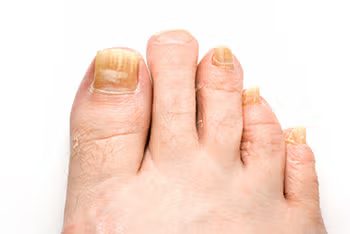
Toenail fungus can cause the nails to become thick, discolored, brittle, distorted, or difficult to trim. Without appropriate treatment, the infection may spread to other nails or contribute to discomfort when wearing shoes.
At Preferred Footcare, our podiatrists diagnose and treat fungal toenails in Stamford, Connecticut. We determine whether fungus is responsible for the nail changes and recommend treatment based on the number of nails involved, severity of the infection, and your medical history.
If you have a thickened, discolored, or damaged toenail that is not improving, call (203) 975-9600 or request an appointment with Preferred Footcare.
Request an AppointmentWhat Is Toenail Fungus?
Toenail fungus, also called onychomycosis, is an infection that develops underneath or within a toenail. The fungi responsible for the infection grow well in warm, damp environments and may enter through small cracks in the nail or surrounding skin.
The infection may begin as a white or yellow spot near the edge of the nail. As it progresses, a larger portion of the nail may become discolored, thickened, brittle, or separated from the nail bed.
Toenail fungus can affect one nail or spread to several nails. It usually develops gradually and may be difficult to clear without consistent treatment.
A fungal toenail infection can also occur alongside athlete’s foot. Fungus on the surrounding skin may spread to the nail, while an infected nail may contribute to recurring skin infections.
What Causes Toenail Fungus?
Toenail fungus develops when fungi enter the nail or surrounding skin. Exposure does not always lead to infection, but certain conditions can make it easier for the fungus to grow.
Factors that may increase the risk include:
- Having athlete’s foot
- Walking barefoot in locker rooms or communal showers
- Wearing damp socks or shoes
- Having feet that sweat heavily
- Sharing nail clippers, towels, socks, or shoes
- Wearing the same enclosed shoes before they have dried
- Injuring the toenail
- Having reduced circulation
- Having diabetes
- Having a weakened immune system
- Increasing age
- Having a family history of fungal nail infections
- Receiving pedicures with improperly sanitized instruments
Toenails grow more slowly than fingernails and spend more time inside enclosed shoes. These conditions can make toenail infections persistent.
Damage from tight footwear, running, or a previous injury can also create spaces where fungi may enter and grow.
Toenail Fungus Symptoms
Fungal nail infections may initially cause only minor changes in appearance. Symptoms can become more noticeable as the infection spreads deeper into the nail.
Common signs include:
- Yellow, white, brown, or cloudy discoloration
- Thickened toenails
- Brittle or crumbly nail edges
- A distorted nail shape
- Debris underneath the nail
- Separation from the nail bed
- An unpleasant odor
- Difficulty trimming the nail
- Pressure or discomfort inside shoes
- Redness or irritation around the nail
A thick or discolored nail is not always caused by fungus. Repetitive trauma, psoriasis, aging, circulation problems, and other nail conditions can create a similar appearance.
This is why confirming the diagnosis is important before beginning a long course of antifungal treatment.
When to See a Podiatrist
Schedule an evaluation if:
- The nail changes continue to worsen
- Several toenails are affected
- The nail becomes painful
- The nail is difficult to trim safely
- The nail begins lifting from the nail bed
- Over-the-counter treatment has not helped
- The infection repeatedly returns
- The surrounding skin becomes red or swollen
- You have diabetes or poor circulation
- You are unsure whether the problem is fungal
Patients with diabetes, reduced sensation, or circulation problems should avoid cutting thick nails aggressively. Accidental cuts can develop into wounds or infections.
How Toenail Fungus Is Diagnosed
Visual examination alone may not always confirm toenail fungus because several conditions can cause thickening and discoloration.
During your appointment, the podiatrist may:
- Examine the color and texture of the nails
- Determine how many nails are affected
- Check for separation from the nail bed
- Look for debris underneath the nail
- Examine the surrounding skin
- Check for athlete’s foot
- Review previous treatments
- Ask about nail injuries
- Evaluate circulation and sensation
- Review health conditions and medications
A small clipping or sample of material from beneath the nail may be collected for testing. Laboratory analysis can help confirm whether fungus is present and identify other possible causes of the nail changes.
Testing may be particularly helpful before prescription oral medication is considered.
Toenail Fungus Treatment Options
Treatment depends on the severity of the infection, the thickness of the nail, how many nails are involved, and your overall health.
Because toenails grow slowly, improvement takes time. The damaged part of the nail must gradually grow out while healthier nail growth replaces it.
Topical Antifungal Medication
A prescription topical treatment may be applied directly to the affected nail. Topical medication may be considered for mild or limited infections.
The nail usually needs to be treated consistently for an extended period. Missing applications or stopping too early may reduce its effectiveness.
Oral Antifungal Medication
Prescription oral medication may be recommended for more extensive infections or when topical treatment has not been effective.
Oral medication is not appropriate for every patient. The podiatrist will review your medical history, liver health, and current medications before determining whether it can be used safely.
Laboratory testing may be requested before or during treatment.
Professional Nail Debridement
The podiatrist may carefully thin and trim the affected nail. This can reduce pressure, improve comfort, and make the nail easier to manage.
Debridement alone may not eliminate the fungal infection, but it can be used with other treatments and may help topical medication reach the affected area.
Treatment of Athlete’s Foot
Athlete’s foot and toenail fungus can occur together. Treating the skin infection may help reduce the likelihood of fungus spreading back to the nails.
Nail Removal
Temporary or permanent nail removal may be considered when a nail is severely damaged, painful, or not responding to other treatment.
The podiatrist will explain whether the nail is expected to grow back and what care is needed after the procedure.
Cosmetic Nail Restoration
A damaged or discolored toenail may be cosmetically restored after the nail has been evaluated and appropriately treated. Cosmetic restoration can improve the appearance of the nail but does not replace antifungal treatment.
Preventing Toenail Fungus From Returning
Toenail fungus may return after treatment, especially when the feet are repeatedly exposed to warm and damp conditions.
Helpful preventive measures include:
- Wash the feet daily
- Dry carefully between the toes
- Change socks when they become damp
- Wear breathable shoes
- Rotate shoes and allow them to dry
- Wear sandals in public showers and locker rooms
- Avoid sharing shoes, socks, or towels
- Disinfect nail clippers after use
- Do not share pedicure tools
- Trim toenails straight across
- Treat athlete’s foot promptly
- Avoid nail polish while directed
- Use antifungal powder when recommended
Choose nail salons that follow appropriate cleaning and sterilization practices. If you bring personal nail instruments, keep them clean and do not share them.
Patients with diabetes should inspect their feet and nails regularly and report new redness, drainage, wounds, or nail separation.
Frequently Asked Questions About Toenail Fungus
Can toenail fungus go away on its own?
Toenail fungus usually does not clear without treatment. The infection may remain stable for a time, but it can also spread deeper into the nail or affect other nails.
Is toenail fungus contagious?
Yes. Fungus may spread through contaminated floors, shoes, socks, towels, and nail instruments. It may also spread from one nail to another.
Why is toenail fungus difficult to treat?
The infection often develops beneath a thick nail plate, making it difficult for some treatments to reach. Toenails also grow slowly, so visible improvement may take several months.
Can I cover a fungal toenail with nail polish?
Nail polish may trap moisture or make it difficult to monitor the infection. Ask your podiatrist whether polish is appropriate during treatment.
Will the toenail return to normal?
The nail’s appearance may improve as healthy growth replaces the damaged portion. Results depend on the severity of the infection, the condition of the nail root, and whether other nail damage is present.
Can athlete’s foot cause toenail fungus?
Yes. The same types of fungi may affect both the skin and nails. Treating athlete’s foot can be an important part of preventing recurring fungal toenails.
When should someone with diabetes seek treatment?
A person with diabetes should seek professional care when nail thickening, discoloration, redness, drainage, or skin breakdown is noticed. Avoid attempting to aggressively trim a thick or damaged nail at home.
Schedule a Toenail Fungus Evaluation in Stamford, CT
A thick or discolored toenail should be accurately diagnosed before treatment begins. Preferred Footcare can determine whether fungus is causing the changes and recommend an appropriate treatment plan.
Call (203) 975-9600 or request an appointment online for toenail fungus treatment in Stamford, Connecticut.
Request an Appointment


